
Manufacturing & Retail
Construction & Development
Travel & Hospitality
Professional Services
We build demand with the architects, designers, dealers, and homeowners who decide which products go into a project, then make it easy for each of them to choose yours.
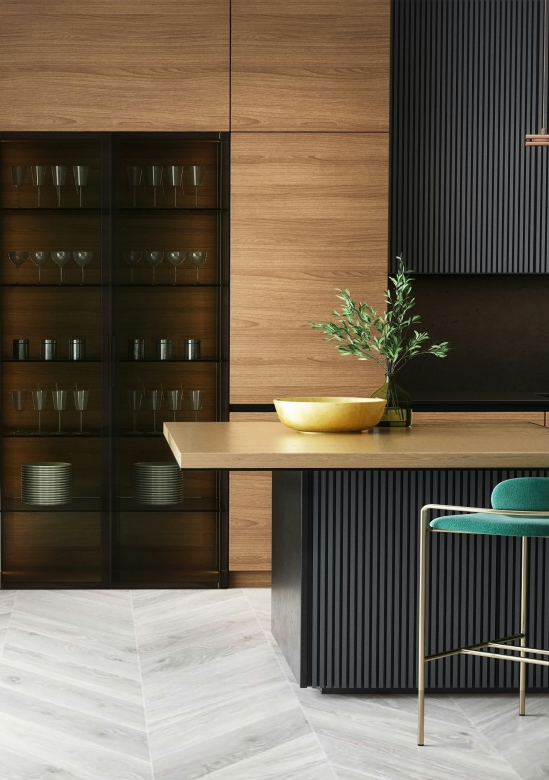
Product decisions often take shape long before an order reaches the manufacturer. Architects, designers, contractors, dealers, and end customers all influence the choice at different stages.
There’s no single route from interest to order, which is why the right digital marketing strategy depends on your category and how you sell. A tile brand, a window manufacturer, and a lighting company each reach buyers differently. A brand selling mostly through showrooms faces a different path than one selling direct.
What stays the same is that each audience shows up with a different question. A specifier needs dimensions, performance data, finishes, certifications, and technical files in a usable format. A contractor wants installation details, tolerances, and to know what happens if something arrives damaged. A dealer needs to know the product is easy to sell and will arrive on time. A homeowner or developer wants to see it in a room, know the price, and feel confident it will still look right in ten years.
Many manufacturer sites answer one of those well and leave the rest to a PDF.
Wherever the decision starts, the research now happens on a screen. Buyers work through search results, visual platforms, trade publications, and manufacturer websites long before they walk into a showroom or send a specification request.
Dealers, distributors, and showrooms still matter. They’re where much of the selling happens, and no amount of marketing replaces a strong dealer network. The gap opens earlier, during the weeks of research before anyone visits a counter. If your product isn’t visible while the shortlist is forming, the conversation your dealer eventually has will be about someone else’s brand.
Four channels run as one program, weighted toward the audiences and markets you need to reach.
Our SEO services solve a common problem for building product brands: they rank well for their own name and poorly for the categories they sell into. Brand search is demand you’ve already earned. Category search is demand that’s still up for grabs.
We rebuild the category and product pages behind those searches, along with the site structure that lets a large product library surface in search results. This work also supports AI search optimization (AIO), since AI-generated answers summarize product options before a buyer ever opens a website.
Specification runs partly on reputation, and reputation is built where your audiences already read. Through digital PR, we pursue coverage, product placements, and commentary in the design and trade publications architects, designers, and builders follow.
Those placements do two jobs. They reach the right audience directly, and the authority they carry lifts your wider search visibility.
Our content marketing work plans, structures, and promotes the information each audience needs. That includes selection and comparison guidance, material and finish explanations, application and installation content, and practical answers about cost, lead time, and maintenance, which decide as many projects as performance data does.
To be clear about roles: we create and organize the content around your products. Technical specifications, certifications, test data, and CAD and BIM files stay yours to supply and approve, because that information has to be accurate and current, and only you can confirm it. Our job is to make sure it’s complete, easy to find, and usable by whoever comes looking.
Organic visibility compounds slowly, which is a problem when a product launches in March or a brand enters a region where nobody knows the name yet.
Paid media across Google Ads, Meta Ads, and YouTube Ads fills that gap with launch campaigns, category targeting while organic visibility builds, geographic expansion, and retargeting for specifiers and buyers who’ve already shown interest. It runs alongside the organic work, and we adjust the channel mix as performance and organic visibility grow.
We work out who chooses the product, where they look, and what’s missing when they get there.

01
Before any keyword work, we identify who influences the choice in your categories and how the decision usually moves. A brand selling engineered flooring through a dealer network needs a different map than one selling architectural hardware direct to specifiers.
We build that picture with your sales team, because they already know it. What they rarely have is the search data showing where those conversations begin.
02
Not every category is worth competing for, and the biggest search volumes rarely sit where the value is. We weigh demand against competition, margin, and where your business is heading.
Sometimes that points to a category where you already hold authority and could capture more. Sometimes it’s a region where your dealer network is strong but your visibility isn’t.
03
Then the work begins. We create category and product content shaped around the audiences from step one, organize resources so a specifier and a homeowner can each find their answer, pursue digital PR where it counts, and run paid campaigns for anything that can’t wait for organic results.
Everything ships in order of the priorities set in step two, not production order.
04
Honest measurement matters more in this industry than most. A brand selling through distribution can’t trace a showroom sale back to a search, and nobody should pretend otherwise.
What we can measure is substantial: category and product visibility, sample and literature requests, spec and file downloads, dealer locator use, quote and contact forms, and direct revenue where you sell direct. We report on all of it clearly, tell you where the trail ends, and work with your team on what the sales side can add from its own records.
We work mainly with premium product brands: companies with substantial catalogs, dealer networks to protect, specifiers to win over, and end customers who research for months before anyone signs anything.
Rocky Mountain Hardware manufactures luxury bronze hardware and sells it through an exclusive dealer network to interior designers, architects and builders, consumers, and the dealers themselves. That’s four audiences with different questions, one catalog, and a marketing team that wanted to generate its own demand instead of relying on how each dealer chose to represent the products.
Over a four-year engagement, traffic rose 44% and conversions rose 1,581%. Most of that growth came from turning the product catalog into a real entry point, with information organized for each audience and easy to find at the moment they were looking.











Hundreds of SKUs, finish and size variants, spec sheets, and files that have to stay accurate. We’ve organized catalogs like that for search without stripping out the detail a specifier needs.
Your dealers and distributors are part of how you sell, so the demand we build points toward them. That’s a different brief than most agencies work from.
A specification decision can take a year and involve five people. Our reporting is designed for that reality. A single-session conversion path doesn’t exist in this industry, so we don’t report as if it does.
You don’t have to commit your whole portfolio. Most engagements start with one category that should be performing better, then expand.

Join the brands that own the social landscape.
I have so much to thank the Unframed Digital team for. I truly appreciate everything they’ve done for our company over the past 2+ years, and for offering their constant support to our internal marketing team. The growth results are amazing, and Maggie, Hope, and Laura have been a joy to work with each step of the way. UFD is unquestionably my go-to SEO team.
Kenji Sweeney
CMO, A Plus Tree
Working with Unframed Digital has been transformative for our business. The optimizing of our website helped us attract more ideal clients, resulting in growth and profitability. We are mutually passionate about the design industry and excited to keep the momentum going.
Christian Nickum
CEO, Rocky Mountain Hardware
It is truly a pleasure to work with the Unframed Digital team. As the owner of an agency, it is extremely important that I can rely on them at all times and that I know everything we have agreed upon will be done top quality and on time. We have excellent and easy communication, which fosters a friendly atmosphere and long-term cooperation. With this approach, I feel like they are an integral part of my agency.
Dimitrije Ostojic
Default Design
Laura and Maggie of Unframed Digital are the most professional, experienced women in the high-end market. They understand the needs of their clients, understand their clients' buyers, and create beautiful work. Highly recommend. Don't hesitate to hire them!
Angela Pointon
11-out-of-11
Unframed Digital has more than just a grasp on SEO – their bespoke approach quickly identified the areas in which our site needed the most improvement, and they took it there while keeping us in the loop throughout the process. A few months later, our site traffic is increasing, our page ranking is going up in search engines like Google, our page structure is cleaned up, and more visitors are coming through our site and finding what they need.
Brogan Conner
SAV Digital
Unframed Digital has been vital to our company’s growth. Not only did they manage to share our vision but they exceeded in providing additional support in other areas or advising on business building. Really appreciate all they have helped us with!
Sarah Latham
Latham Interiors
Working with Unframed Digital has been a great, seamless experience for our company. Laura and Maggie truly understand our market and how to point us in the right direction for growing our brand. We really appreciate all they do to help us and we look forward to our continued growth as we all work together!
Toni Damalas
Lloyd Construction
I’ve been a partner with the wonderful team at Unframed Digital for about a year. They are amazing to their clients and do everything they can to provide outstanding results. They’re constantly innovating to improve their services and the clients’ performance.
Steve Lamar
AlwaysRank, Partner

People are researching your categories today, and some of them will specify or buy something within the year. Show us the categories that should be growing faster, and we’ll show you who’s capturing that attention now and what it would take to win it back.
SEO and AI visibility, content and product resources for each audience, digital PR in the trade press, paid media, and reporting on the demand that can be measured.
We show up in search for the categories they research, create the technical and selection content they need, and earn placements in the publications they read professionally.
All three. Your sales mix changes the plan considerably, especially around pricing visibility and how much demand we send toward dealers instead of a direct checkout.
Yes. Paid media usually carries the early weight while organic visibility builds. Geographic and category launches both perform better with the two running together.
Paid campaigns start producing right away. Organic category visibility usually takes several months, and because of specification cycles, revenue can trail visibility even longer.
Pricing depends on the size of your catalog, the number of categories and markets in scope, and which channels the program includes. You’ll see the numbers before you commit to anything.