
Manufacturing & Retail
Construction & Development
Travel & Hospitality
Professional Services
We put your firm in front of clients when they are researching rooms, styles, and budgets, well before they search for someone to hire.
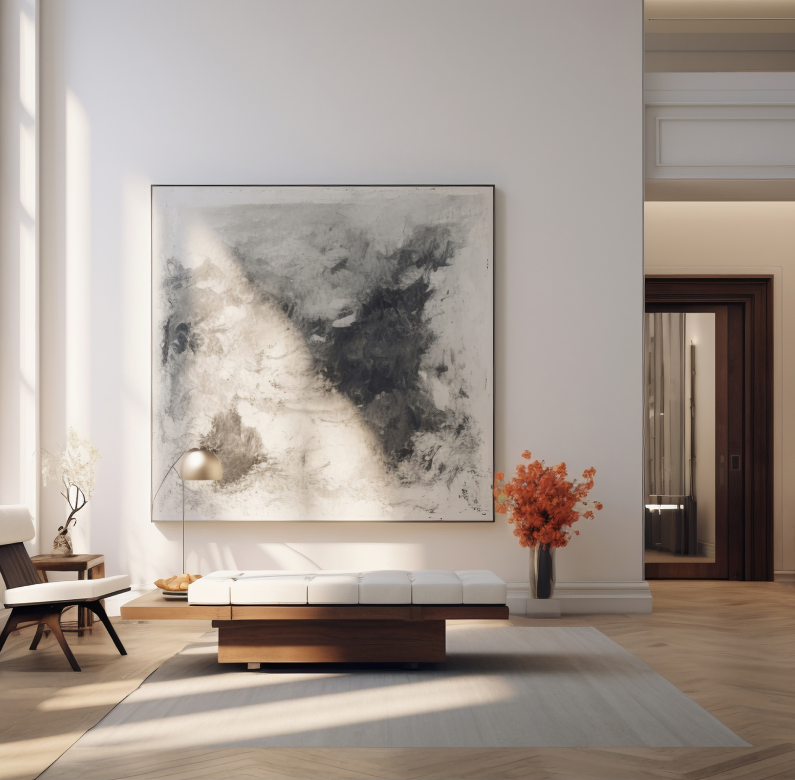
The path to hiring a designer starts with months of searches that never mention one.
Someone planning a full renovation doesn’t start by searching for a design studio. They start with a room. What to do about a kitchen that has never functioned well. Whether a narrow living room can fit a sectional. How much it typically costs to redo a primary suite properly. How one plaster finish compares to another, and how well either option holds up.
A strong SEO strategy has to account for these searches. They carry enormous volume but almost none of the terms a firm would recognize as a lead, so most publish nothing for them. As a result, the entire education phase of a project happens on someone else’s content: retailer guides, content sites, and platforms built to capture exactly this kind of curiosity.
By the time budgets and preferences take shape, someone has shaped them, and it’s rarely the firm hoping to be hired.
Eventually, the designer search does happen. Someone types in the term designer, a city, and a project type, then compares whatever shows up.
By then, the important decisions are made. They know roughly what they want, what it may cost, and the look they’re after. A design studio showing up at this point isn’t introducing itself to an open mind. It’s working against conclusions the client reached months earlier, often from sources that will never design anything.
That’s a hard position to compete from, yet it’s where most design studios spend their entire search budget. The studios that do better show up earlier, answering the questions clients are already asking long before anyone is ready to hire.
Our work covers five areas, focused on the rooms and project types that bring in the work you value most.
This is where the opportunity is, and most firms have nothing to offer here. We create room, style, material, and cost content that answers the research phase properly, drawn from what your designers already know and tell clients every week.
Each piece is built to lead somewhere: toward a project type worth more of your time, toward the next question a client will ask, and eventually toward a conversation.
Done well, this content does something a portfolio can’t. It reaches people before they’re ready to look at one, and it gives search engines and AI assistants something substantial to draw from when someone asks a detailed design question. That second part is where AI search optimization (AIO) earns its place in the plan.
Interior design is one of the few fields where people truly search visually, yet most firms treat photography as something to display instead of a way to be found.
We improve how your work is described, structured, and attributed, giving search engines clearer context for each image and a stronger connection between the photography and your firm. The photography is what you’ve already commissioned. What changes is whether people can find it.
Coverage in the publications your clients and peers read does two things at once. It reaches prospective clients directly and earns relevant mentions and links that strengthen your site’s overall search authority.
Our off-page SEO work pursues the features, roundups, and mentions that are realistic for a firm at your level, and makes sure each placement leaves something lasting behind instead of a week of traffic and nothing more.
Most design sites describe what the company does in general terms. That ranks for design in general, which is neither useful nor winnable.
We use on-page SEO to build dedicated pages for each type of project you’re pursuing: full-home, kitchen and bath, commercial interiors, hospitality, multifamily, or whatever your firm is aiming for. Each page is written for someone with that specific project in mind, so readers don’t have to dig through a services list to figure out whether you’re a fit.
Most SEO for interior designers stops here, at the city-plus-designer search. Local search does matter, because design is still bought face to face, especially for residential work, and local presence carries more weight than the search volume suggests.
Our local SEO work covers your business profile, reviews, and the location signals that surface your design studio for anyone searching in your city and the neighborhoods you serve. It’s one part of a broader program. A firm that’s visible only in its own city ends up competing on proximity alone.
We start with the projects worth winning, build over months before anyone is ready to hire, then measure what books.

01
Most engagements like this start with an audit. Ours starts with a business question: which projects do you want more of, and where?
An interior design firm looking for more hospitality work needs a different program than one growing a residential practice in two affluent suburbs. Until that’s settled, everything else is a shot in the dark, so we start there, with whoever decides what work the firm takes on.
02
Next, we map how someone actually arrives at a design studio like yours: the questions they ask at the start, the comparisons they make in the middle, the terms they use at the end, and which of those you currently show up for.
That map becomes the content plan, prioritized by commercial value and by the gaps where your firm is currently missing.
03
Publishing more content on a site with technical problems wastes the content. So before we scale, we focus on technical SEO: site structure, internal linking, how images are handled, site performance, and whether your existing pages are competing with one another.
This stage is short and unglamorous. It also decides whether everything after it compounds or simply piles up.
04
Then comes the long-term work: building authority through features and mentions, publishing content on a schedule your firm can sustain, and reporting on consultations and project inquiries instead of sessions.
We track which project types and which content lead to conversations, so the program keeps shifting toward the work you told us you wanted in step one.
Interior design firms and design-led brands are a core part of our work. They share discerning buyers, slow decisions, and a gap between being considered and being overlooked that usually comes down to showing up early with something worth reading.










We already understand how design firms win work, why a project type matters more than a keyword, and why a designer won’t publish anything that misrepresents how they practice. That means our first conversation can start with the projects, markets, and clients you want to grow.
You shouldn’t have to explain your industry to your agency before the work begins.
Traffic is easy to grow and easy to mistake for progress. We report on the number of consultations and project inquiries coming from search, and which content and project types produced them.
Signed projects depend on fit, chemistry, budget, and timing, none of which an agency controls. We measure up to the point where the work becomes yours.
A studio with a full pipeline of the wrong work is not in a better position than one with a quiet month. More inquiries is the easy version of this job.
The harder and more valuable version is changing which inquiries come in. We do that by focusing visibility on the project types, budgets, and areas you’re targeting, and by being specific enough that a poor fit recognizes the mismatch and moves on.
SEO timelines depend on the site’s starting point, the competitiveness of its markets, and how quickly recommendations are implemented. Some content opportunities may begin gaining visibility earlier, while competitive service and location terms and sustained authority usually take longer.
Before you commit, we explain which opportunities are likely to move first, which will take longer, and what needs time to compound.

Join the brands that own the social landscape.
I have so much to thank the Unframed Digital team for. I truly appreciate everything they’ve done for our company over the past 2+ years, and for offering their constant support to our internal marketing team. The growth results are amazing, and Maggie, Hope, and Laura have been a joy to work with each step of the way. UFD is unquestionably my go-to SEO team.
Kenji Sweeney
CMO, A Plus Tree
Working with Unframed Digital has been transformative for our business. The optimizing of our website helped us attract more ideal clients, resulting in growth and profitability. We are mutually passionate about the design industry and excited to keep the momentum going.
Christian Nickum
CEO, Rocky Mountain Hardware
It is truly a pleasure to work with the Unframed Digital team. As the owner of an agency, it is extremely important that I can rely on them at all times and that I know everything we have agreed upon will be done top quality and on time. We have excellent and easy communication, which fosters a friendly atmosphere and long-term cooperation. With this approach, I feel like they are an integral part of my agency.
Dimitrije Ostojic
Default Design
Laura and Maggie of Unframed Digital are the most professional, experienced women in the high-end market. They understand the needs of their clients, understand their clients' buyers, and create beautiful work. Highly recommend. Don't hesitate to hire them!
Angela Pointon
11-out-of-11
Unframed Digital has more than just a grasp on SEO – their bespoke approach quickly identified the areas in which our site needed the most improvement, and they took it there while keeping us in the loop throughout the process. A few months later, our site traffic is increasing, our page ranking is going up in search engines like Google, our page structure is cleaned up, and more visitors are coming through our site and finding what they need.
Brogan Conner
SAV Digital
Unframed Digital has been vital to our company’s growth. Not only did they manage to share our vision but they exceeded in providing additional support in other areas or advising on business building. Really appreciate all they have helped us with!
Sarah Latham
Latham Interiors
Working with Unframed Digital has been a great, seamless experience for our company. Laura and Maggie truly understand our market and how to point us in the right direction for growing our brand. We really appreciate all they do to help us and we look forward to our continued growth as we all work together!
Toni Damalas
Lloyd Construction
I’ve been a partner with the wonderful team at Unframed Digital for about a year. They are amazing to their clients and do everything they can to provide outstanding results. They’re constantly innovating to improve their services and the clients’ performance.
Steve Lamar
AlwaysRank, Partner

Future clients are already researching rooms, budgets, materials, and project types. Tell us which projects you want more of, and we will map where your firm should appear before the shortlist takes shape.

Research-phase content, project type pages, image and visual search work, local visibility, digital PR for features, and reporting on consultations and project inquiries.
Those are the searches clients make for months before they look for a designer. Content built for them reaches people while their preferences are still forming, before those preferences are set.
All three, plus firms that work across them. What changes is which searches matter, since a hospitality client and a homeowner research in completely different ways.
Through your business profile, reviews, and location signals, along with content tied to the areas you serve. Design is still bought face to face, so proximity carries weight.
It can, once your images are properly described, structured, and attributed. Most firms publish beautiful photography that search engines can’t interpret or credit.
That’s the goal. Focusing visibility on specific project types, budgets, and areas attracts prospects who are a good fit and lets the others rule themselves out.
Research-phase content tends to gain traction within a season or two. City and project terms take longer. Press and authority take the longest, and their impact compounds the furthest.
Yes, and it is a large part of the practice. Product brands are covered on our building materials and eCommerce pages, which address a different buying process.
Pricing depends on your site’s size, how many project types and markets are in scope, and the content the plan calls for. You’ll see the numbers before anything is agreed.